Friday, June 6, 2025

Nacho G. Velilla | Fuera de carta (Chef's Special) / 2008

finding family

by Douglas Messerli


Nacho G. Velilla, David S. Olivas, Oriol Capel, and Antonio Sánchez (screenplay), Nacho G. Velilla (director) Fuera de carta (Chef’s Special) / 2008


This Spanish farce was a terribly popularly film at home in Spain, ending up at the 6th best-selling movie in 2008, while the critics demurred.
     Well, it is true that this is a sort of mock hysterical comedy, and its plot, written by 4 screenwriters weaves a sort of threadbare pattern that is as unbelievable as almost any film out there; but if you sit back and enjoy its broad humor you can certainly understand its audience appeal.


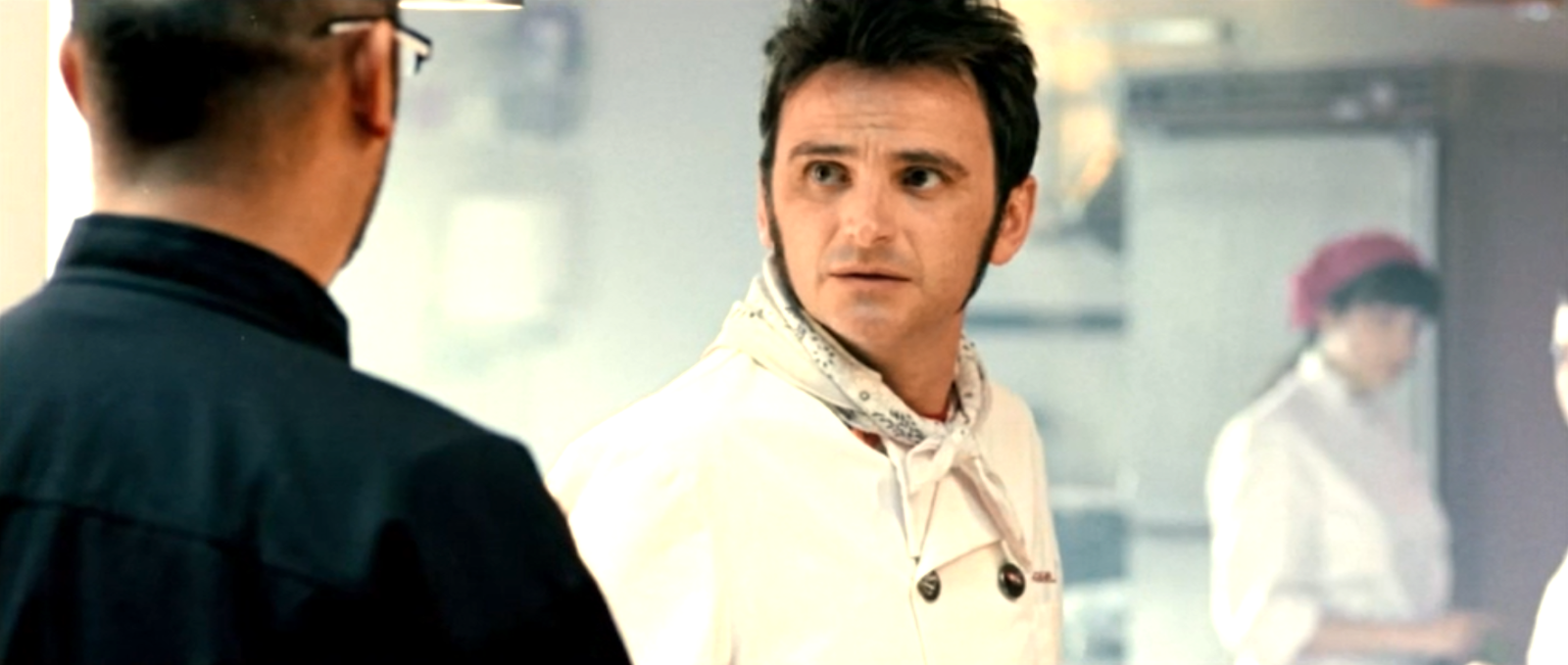
     Noted chef of the Xantarella Maxi (Javier Cámara) is a perfectionist when it comes to food, and like many an owner chef almost abuses his employees, some of whom such as Ramiro (Fernando Tejero) seem to almost deserve it. Maxi’s goal is to win a star from the Michelin Guide. Indeed, the film begins with Ramiro mistaking a Michelin tire salesman with a reviewer of restaurants, the staff cooking up a very special meal for no result.

      But things get “cooking” so to speak with Maxi’s maître d’ Alex (Lola Dueñas) arrives drunk and forlorn, having once more been dumped by a man. Maxi, a gay man, long out of the closet and openly homosexual, comforts the angry woman by taking her home and attempting to put her to sleep on his couch, mostly with little effect.   

   He also attempts to help Alex find a new love when Alex and he discover that the famed former Argentinian soccer player, Horacio (Benjamín Vicuña) is a regular customer. Joining her on what she defines as their first date, Maxi attempts to further Alex’s relationship, but in the process discovers that, in fact, Horacio is a closet gay man in love with Maxi himself.


       Horacio and Maxi go to bed, while Alex attributes Horacio’s failure to carry through sex as his chivalrous behavior. She continues to delude herself for many days until Horacio admits that she is not for him, Alex presuming he has another woman, and again becoming furious with the intent of tracking his bedmate down to destroy her. When she finally discovers that the other woman is actually her boss, she once more goes on a rampage.

       This craziness might have been enough for any one farce, but an even more important even occurs when his ex-wife dies and their children, Edu (Junio Valverde) and young sister, are forced to come live with him, both, particularly the angry young teenager Edu hating their father for his years of inattention. The boy’s anger is most palpable when he gets into a fight about homosexuality, bullying a young gay boy of his age, at school. Edu is expelled.

        Horacio, running a boys’ soccer group somewhat ameliorates his anger, and at a father son game he literally tales his revenge on his father in the name of game aggression. But when he discovers that, in fact, Horacio is his father’s lover, the situation for Maxi becomes impossible, and the chef is forced to take his children to his own unforgiving conservative and constantly arguing parents to live.    

      Maxi’s restaurant is near bankruptcy. But then he is secretly given the name of the true Michelin Guide reviewer, and is rejuvenated with possibilities. Indeed, the reviewer makes a dinner appointment, which happens also to be Edu’s birthday.


        Finally, realizing what a failure his has been, Maxi decides to drive to his parents to bring his son a special gift, believing he will be able to return before the reviewer arrives. He puts his saute-chef in charge, only to discover via telephone that she, who is pregnant, has gone into labor and the reviewer has arrived early. Although his daughter his happy to see him, Edu is still angry until Maxi admits that yes, he did dislike the fact of his children’s existence and that he has failed at everything. Suddenly, and quite unbelievably, Edu and he make up, while the foolish Ramiro is left to speak for Maxi’s excellent restaurant.

       The results are quite obvious, as in the last scene we observe the Xantarella having been turned into a small and cosy café, and finally Maxi, a changed man, determines to take off a day to share with Horacio, Edu and daughter on trip in the country, leaving the cooking to his able and no longer abused workers.

       The joy of the film is the farcical chaos it creates, but at the same time it is so stuffed with plot details which jut off in all directions (I have left out dozens of extraneous scenes), that anyone who desires a truly coherent message—critics obviously—will be confused and disappointed. One should leave this film to its appreciative everyday audiences who don’t mind, apparently, patching up the holes when the film goes awry.

      Frankly, I loved this rather old-fashioned comic treat. To describe it as anything else would be nearly impossible, but we need farce sometimes in our lives.


Los Angeles, June 5, 2025

Reprinted from My Queer Cinema blog (June 2025).  


Wednesday, June 4, 2025

Marco Ferreri | Storia de Piera (The Story of Piera) / 1983

the doomed

by Douglas Messerli


Piera Degli Esposti, Dacia Maraini, and Marco Ferreri (screenplay), Marc Ferreri (director) Storia di Piera (The Story of Piera) / 1983


In this highly eccentric and beautifully filmed work, director Marco Ferreri and his writers introduce us to a family in which each individual seems at some point or another to lose their minds or at least break all roots with conventional behavior. The most interesting of these, and winner of the Cannes Best Actress award at the 1983 Cannes film festival, is Eugenia (Fassbinder’s great actor, Hanna Schygulla), who, although married to the hard-working Lorenzo (Marcello Mastroianni), who has married her for love and remains quite blindly still in love with her.

     Eugenia might be described in several ways, as a kind of early hippie, a wild being who simply cannot be and will not be sexually contained, or a sexually obsessed woman who has no comprehension at all of how to raise her family, daughter Piera (Isabelle Huppert) and son, the latter of whom we hardly get to know, he being raised up by a conservative servant in the house.

     It is Piera who serves as the focus of the film, first serving as her mother’s caretaker as she follows her about the city during behavior the literature on the film generally describes as “unbalanced.” Surely a mother fucking with abandon nearly every man she meets might be described as “unbalanced” or even emotionally unstable.

     Piera, accordingly gets a stranger vision of female sexuality as she moves from kissing contests with the local boys to her first encounters with young males and finally into the arms of a lesbian friend, to say nothing of the almost incestuous relations between both her mother and father. Both seem almost blind and certainly passive about each other’s activities, and in his job high up in the Italian Communist Party (Partito Comunista or PC), Lorenzo is absent from home for long periods. But even when he is home, tucked away in the rich rooms which cinematographer Ennio Guarnieri, at times, has made to look like the interiors from a Dutch painting, he appears nearly oblivious of his wife’s actions.

     Eugenia is finally deemed so beyond the normal that she is hospitalized and given shock therapy. And Piera escapes to Milan where she becomes a well-known actress.


      Upon a visit back home to one to Italian city of Latina, founded in 1932 by Benito Mussolini, Piera discovers that her father, forced to give up his job in the PC, has also been institutionalized. She finds him in bed with another man and a small dog, an uncaring attendant describing them as faggots. Lorenzo seems to have given up on almost on meaning, but is heartened again to see his now successful daughter.

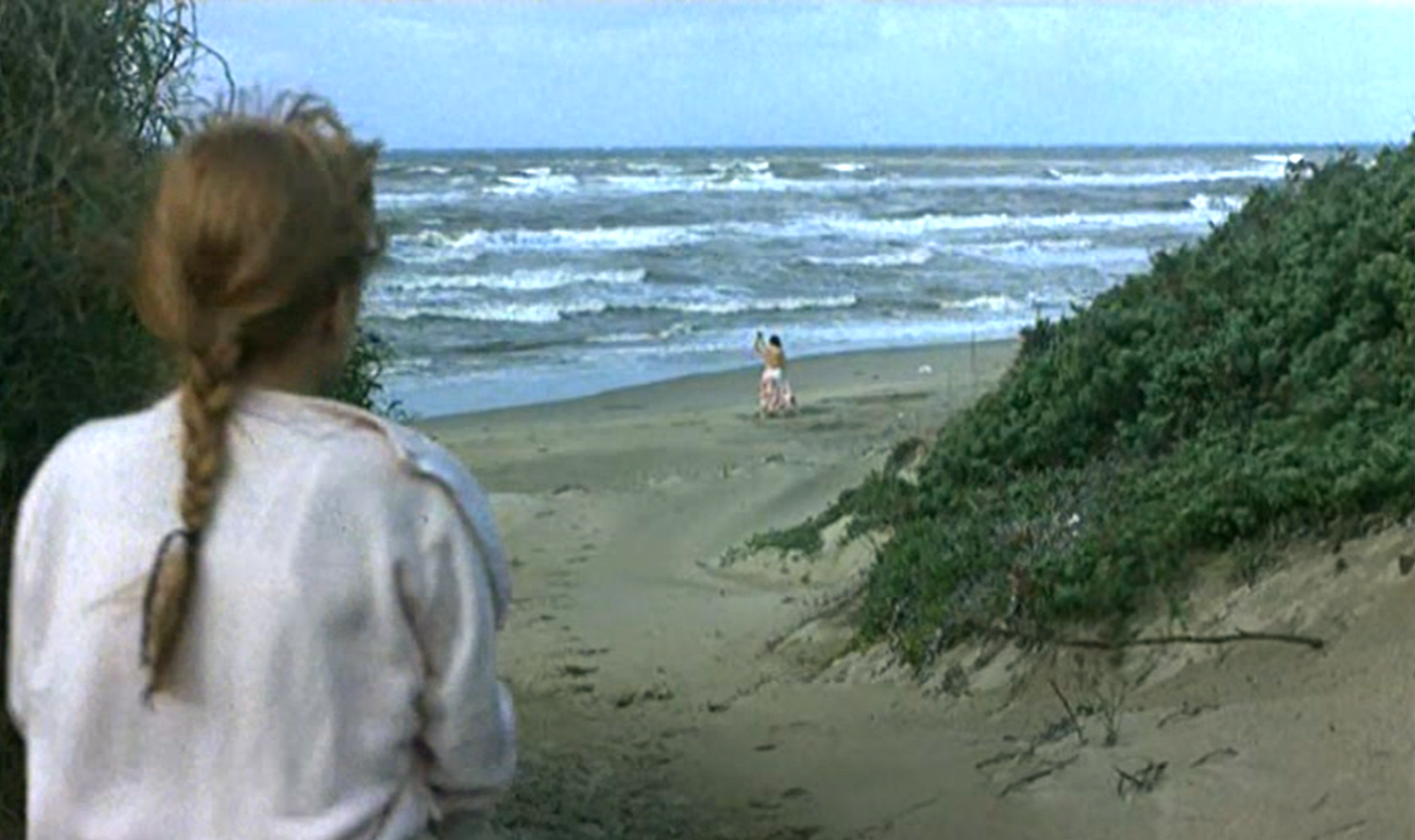
       Soon after, her mother’s mind is so deteriorated that she is also locked away, refusing to even allow her hair to be cut and checked for lice. The arrival of Piera calms her just enough for a cutting and a trip to the beach where we have seen her early in the film have sex with one of her endless male encounters. There, she strips herself naked and demands Piera do the same as the two embrace in a deep expression of the love, confusion, and disappointment they have endured throughout.


      This is a very loosely constructed—one might describe it as haphazard—work that focuses instead on the constantly shifting worlds of this doomed but fascinating family.


Los Angeles, June 4, 2025

Reprinted from My Queer Film blog (June 2025).   

Bruce LaBruce | No Skin Off My Ass / 1991

 playing roles

by Douglas Messerli


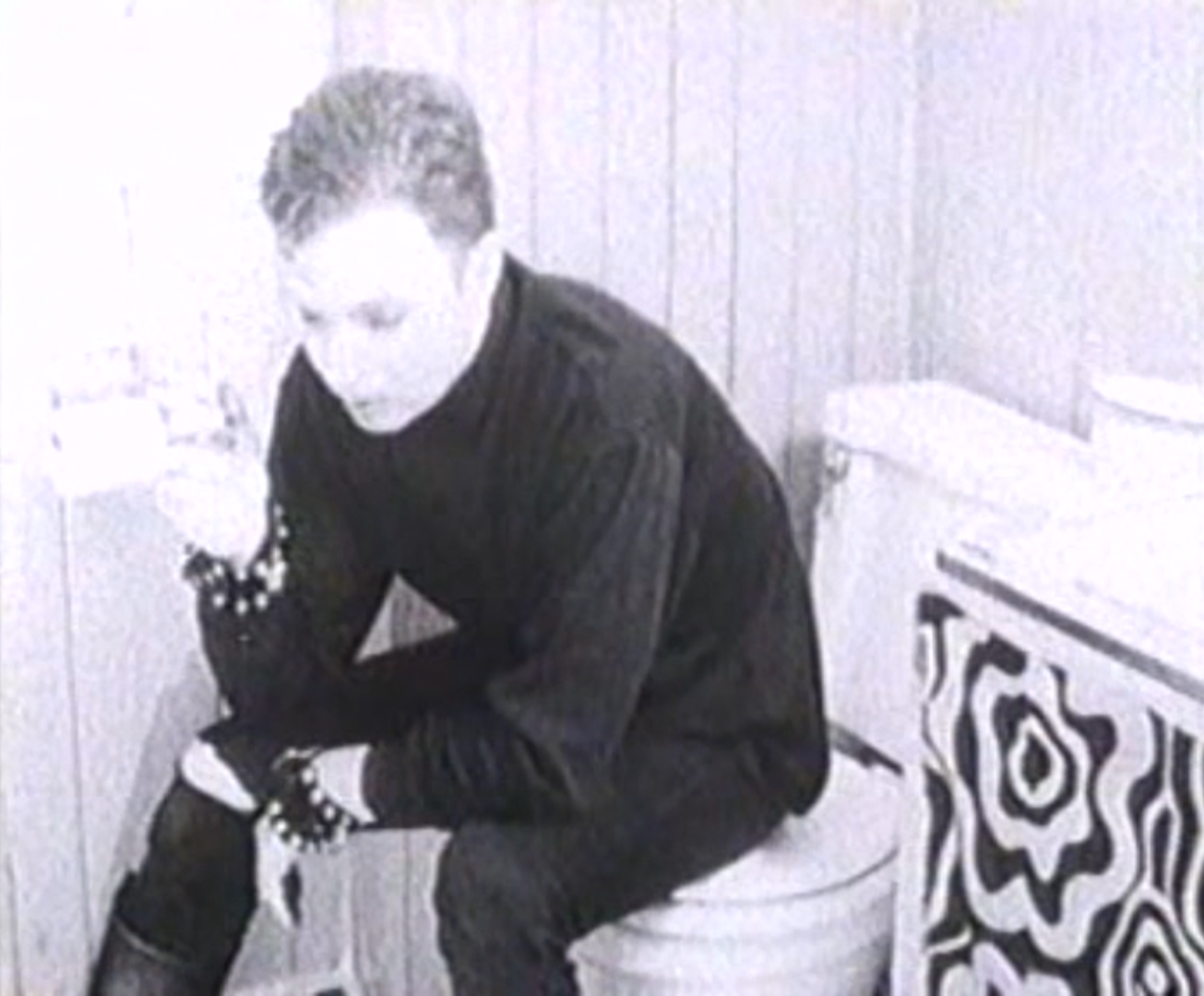
Bruce LaBruce (screenwriter and director) No Skin Off My Ass / 1991


With $14,000 and using himself and his then lover Klaus von Brücker as the major actors, now famed queer film director Bruce LaBruce created his first film, No Skin Off My Ass, which has since become a cult favorite and is recognized as an innovative, punk film, which Alexander Cavluzzo describes as “the voice of hardcore, tongue-in-cheek dissent with porn-packed political allegories.”

     It begins with LaBruce, described throughout as The Hairdresser, encountering for the second time in a day, what he believes to be a neo-Nazi skinhead (von Brücker), sitting a shiver at a local play yard bench.


     He offers him a room for the night, takes him home and provides him with a hot bath, while he explains that although he has a large clientele, and is successful businessman, he has grown less and less interested in his work as he has increasingly become obsessed by skinheads.

     Through this film, LaBruce gives us a close analysis of skinhead behavior, desires, differences, and purposes. What he doesn’t know is that actually this “skinhead” is not really a skinhead, but a young man who, as his sister Jonesy (G. B. Jones) reveals, often goes into his “bit,” in which for days at a time he grows mute, frustrating family and friends.

     LaBruce, not at all comprehending the strange boy his has picked up, despite his sexual desires, puts him into the guest room and retires for the night into his own room.

     The next morning the young “skinhead” escapes to visit his lesbian sister, Jonesy, who with her friends is making a documentary around the Symbionese Liberation Army.

     Von Brücker would also like to be in her film, for which she forces him to strip and seduce the lesbian women, all to utterly no success.

      Later, the “skinhead” has a dream about an S&M sexual situation involving The Hairdresser, who cuffs him and demands the young man roil around the bathroom stool. He returns to his so-called savior and again spends a sexless night, this happening for a period, before finally Jonesy makes a visit to the place, while The Hairdresser is entertaining a neighborhood or family child at the same play yard we saw earlier.

     He returns to encounter Jonesy berating her brother in his living room, she insisting that her brother is really gay and obviously is attracted to The Hairdresser, arguing they should simply admit that they are both gay, settle down and have sex.


      Some of LaBruce’s and von Brücker private sexual tapes follow, which in 1991 were considered pornography, but which today seem rather sexual tame. Yet, at least the two are finally a true couple, as the former Skinhead gets a moccasin hairdo while a punk band shouts out repeatedly, “Be a fag.

     The two are finally a true couple, as the former Skinhead gets a moccasin hairdo while a punk band shouts out repeatedly, “Be a fag.” Indeed, the score throughout is utterly fascinating.              

     Jonesy admits that her film as never made because there was no financial backing, and she is now in trouble with the police for her graffiti works. She will probably have to leave town, she reports.

    According to LaBruce the film is "a queer retelling of Robert Altman's That Cold Day in the Park (1969). Altman’s film is based on the novel by Peter Miles. As LaBruce describes it, “Altman de-queered it, so I decided to re-queer it... When I showed the film for the first time in Los Angeles in 1991, somebody brought Miles to my screening and he said my no-budget Super-8 movie was better than the Altman version! He gave me an autographed copy of his novel inscribed: ‘You got it right.’"


Los Angeles, June 3, 2025

Reprinted from My Queer Cinema blog (June 2025).
Tuesday, June 3, 2025

Antonio Capuano | Pianese Nunio, 14 anni a Maggio (Sacred Silence) / 1996

dirty heroes: body and soul

by Douglas Messerli


Antonio Capuano (screenwriter and director) Pianese Nunio, 14 anni a Maggio (Sacred Silence) / 1996


The local Naples priest, Don Lorenzo Borrelli (Fabrizio Bentivoglio), titled the blue jeans priest, is akin to the heroes of many a movie, including those represented in Matteo Garrone’s Gommorah and in the character of Father Pete Barry in Elia Kazan’s On the Waterfront (1954). Both characters Barry and Borrelli along with director Garrone are fighting war, so to speak, against the local mafia or in the Naples more particularly the Camorra, who controls Naples and is prevalent in Borrelli’s poor neighborhood. And Borrelli knows that he cannot save the young children he attempts to nurture as long as the parents accept the mafia and engage with them as a daily part of their lives.


      Yet like Father Barry, he speaks out, endangering his own life and sometimes even those of his parishioners, trying to convince families that accepting and participating with the Camorra will leave them all in the chaotic conditions in which they and their neighbors have been living for decades. Borrelli is what we might describe as a hero-priest, someone with high ideals living them out in real before the rollercoaster of a shabby world in which both live.

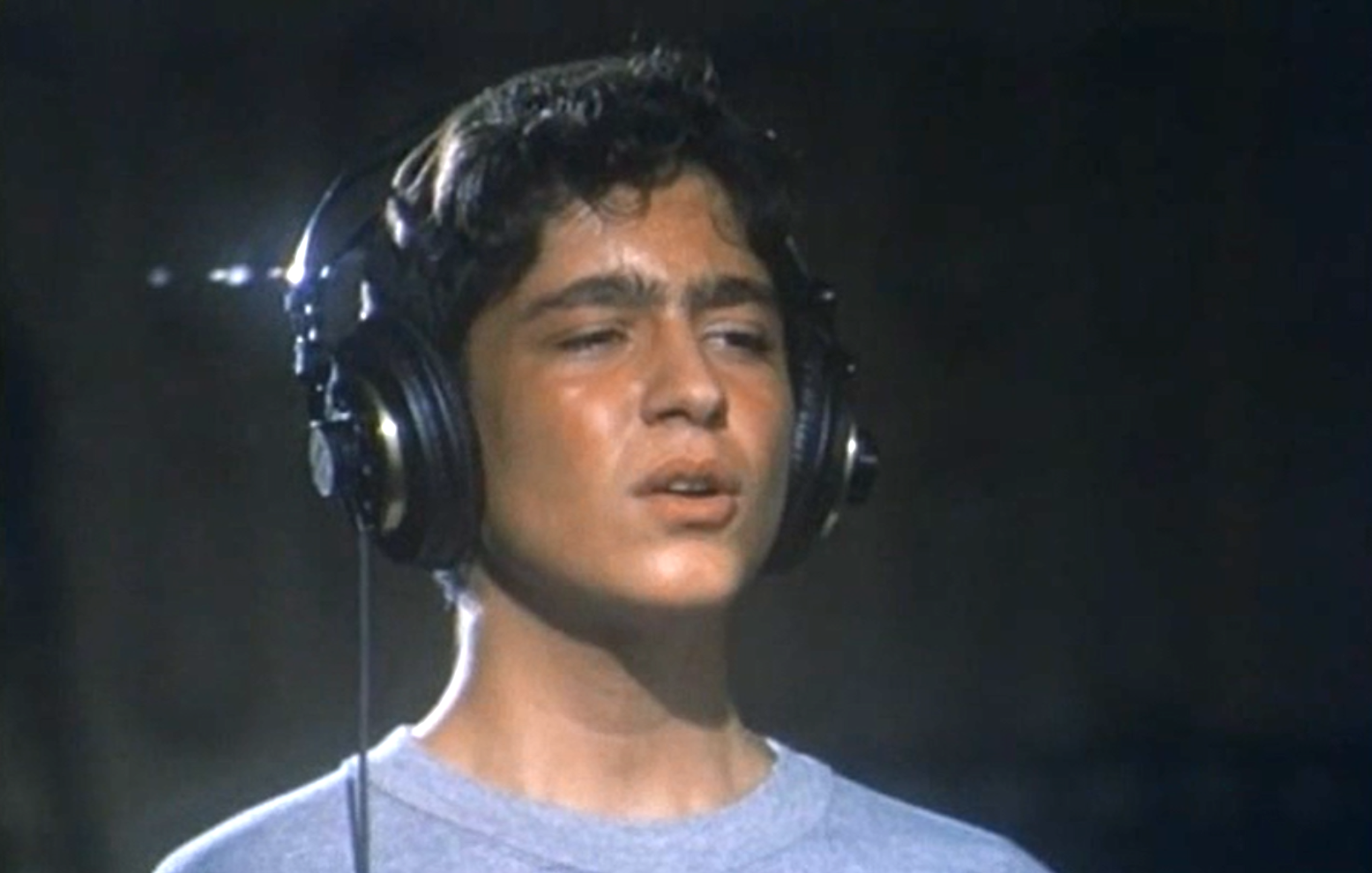
     Yet Borrelli has a serious flaw: he has uncovered a beautiful young 13-year-old, a talented singer who also plays the organ for his church, and himself wishes to become a priest, with whom he has he now spends his meals, his intellectual tutelage and, rather shockingly, his “personal affection.” In short, this hero-priest is also pedophile, trapped between his ideals and his body.


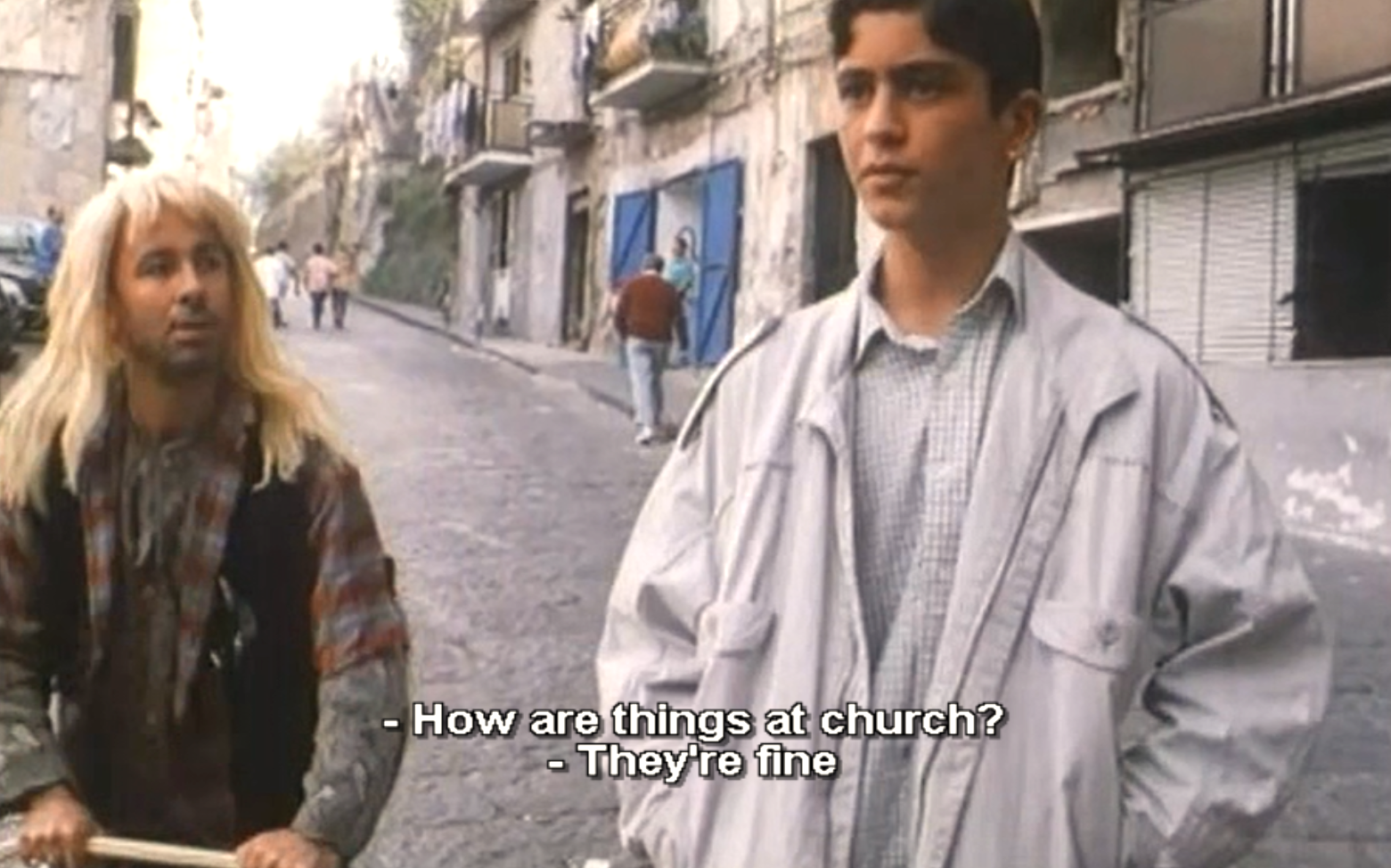
    The boy himself later admits that he was not averse to his priest’s “affections,” and knows that there is no one in his crazed society—his father, dressed in a blond wig, goes about the city with a cart selling eggs and other foodstuffs, while his mother is basically a whore, the boy’s own brother later proudly admitting he is now a Camorra member—and he truly loves Father Borrelli.


     The local mobsters, tired of the harangues against them and, for all their seeming strength, necessarily seeing the revealment of the priest’s secret life as their way to shut him up, begin their pressure on the young acolyte.

     In a perhaps overlong series of events and a great many verbal attacks against his social enemy, the Camorra, the movie makes it way surely to where we all know it must end.

     Director Capuano does not forgive his tragic hero for his awful sins of the flesh, but does reveal him in the final scenes as a kind of Christ, who refuses even a funereal in the church for one of the Camorra leaders who has just been killed.

     This is a swirling world of murder, injustice, and hate, in which there are no pure “heroes.” Borrelli, himself, has justified his pedophile behavior with a notion that “eroticism and sanctity” are the same thing.

      By film’s end, disgusted as we may be by his sexual behavior, the viewers themselves must ponder the same question.

      Increasingly, through local attacks (the film begins after an attack on Borrelli, where youths have stolen his watch and beaten him), the young Nunio is pressured by his father, brother, and others, as well as a team of a male and female policemen, visiting his school where they pretend to be social workers. Nunio is manipulated to become a kind of traitor, desiring freedom from Borrelli’s sexual bonds—he is, it appears actually a heterosexual—knowing at the same moment that there is no one else in this terrible stack of rubble who has cared more for him and given him his own identity.

     By the time of his last visit to Borrelli, the priest even permits the young boy to betray him to the police with the words, “If you report me, I’ll say nothing against you.”


      The boy does so, almost unwillingly, yet tired, as he puts it, of being a “sheep.” And the result is the silencing of one of the few social forces attempting to stand up to the Camorra.

      We recognize that even Nunio’s life will end disastrously, as in one professional gig he ends up with another boy singing in the subways.

      This movie could not probably me made or taken seriously today when instead of pondering such issues we simply dismiss them as immoral, but in 1996, Matt Blake writing in The Wild Eye, described it as “an amazingly courageous film, considering the fact that it’s essentially about a paedophile and, what’s more, a paedophile who is in many other ways so upstanding and heroic. Lorenzo certainly makes for a difficult protagonist, at the same part admirable and despicable; and the fact is that he takes advantage of a vulnerable young man in much the same way as the Camorra he so despises. But he’s a genuinely tragic protagonist, someone who tries to do good but fails because of fatal character flaw which not only undermines his cause but also his whole moral bearing.”

      This is the kind of film that one carries with one for months after seeing it, a work gnawing at the heart and mind. There is no easy answer for dirty heroes. 


Los Angeles, June 3, 2025

Reprinted from My Queer Cinema blog (June 2025).


Monday, June 2, 2025

Achím von Borríes | Was nützt die Liebe in Gedanken (Love in Thoughts) / 2004

tied up in knots


by Douglas Messerli


Achím von Borríes and Henk Handloegten (screenplay, based on a story by Annette Hess, Alexandere Pfeuffer and Arno Meyer zu Künigdorf, based on the book by Meyer zu Küingdorf) Was nützt die Liebe in Gedanken (Love in Thoughts) / 2004


This beautiful, languorous, German film is based on the then notorious Steglitz Student Tragedy of 1927, part and parcel of the inglorious Weimar Republic before the Nazi takeover.

     In this poetical work, the wealthy student Guenther (August Diehl) and his sexually precocious sister Hilde (Anna Maria Mühe)—the latter of whom is determined never to tie herself down to one man or sexual desire— invite during a school break, the young somewhat dense and certainly intense poet and working-class figure Paul (Daniel Brühl).


     Guenther clearly has the hots for his poet, but because apparently of the latter’s heterosexuality, attempts, with immediate success to introduce him to his beloved sister (beloved, in this case, intonating the brother’s own feelings for his sister).

     Moreover, Guenther’s great sexual love, in whose arms he has felt the greatest moments of joy is Hans (Thure Lindhardt) who works as a soup cook in the city. The two have been lovers in the past and the film centers on his attempts to rekindle that relationship in a wild all-night party Guenther throws in his country villa, a party which includes a wide range of individuals, including Hilde’s wall-flower friend Elli (Jana Pallaske), who is in love with Paul from an earlier meeting with the Scheller’s, Guenther and Hilde. Oddly enough it is Elli who temporarily gets her man and turns the virgin into an even more confused young man. Behind the endless liquor, dancing, violence, and lovemaking is Guenther’s own gun violence, as he establishes a suicide club and will end in Paul and he killing themselves after taking revenge on all those who have hurt them in their attempts to engage in love. As Dennis Harvey, writing in Variety nicely summarizes the situation:  “Longing and jealousy flare over the course of a weekend spent largely at a lakeside summer house. There, the assembled get drunk, frolic in their lingerie, jump over a bonfire, go skinny-dipping, quote Goethe, hallucinate on absinthe, write poetic odes to one another, have sex and sulk a lot.”


     When Guenther tries once again to get Hans into is bed, the busy boy runs off to Hilde’s room, resulting in a heaving wave of disrepair, sadness, and violence. 
     Come morning, Guenther discovers Hans hiding behind a curtain in Hilde’s room and shoots him dead before pointing the gun to his own head a pulling the trigger.

  Fortunately, Paul, now destroyed does not reciprocate regarding Guenther’s suicide pact, and is eventually able to explain the circumstances; he is sentenced to three months in jail for weapon charges, and found innocent of all other involvement.

   Because of the notoriety of the events, he is forced to escape Nazi Germany. Elli, we are told, ever marries.

   Perhaps, as Harvey suggests, the major problem of this otherwise fascinating Fassbinder-influences study of the mold gathering round the Weimar Republic well-to-do (while also exposing their up-to-date conceptions of the world, is that “the lead thesps [thespians] are OK, but both script and direction err assuming that having them endlessly stare at one another with feigned desire or anguish will provide all the emotional intensity (let alone psychological depth) needed.

    Yet one cannot help but stare back at these lost figures of a doomed time with sympathy and a sense of their tragic moment in history.


Los Angeles, June 2, 2025

Reprinted from My Queer Cinema blog (June 2025).


Daniel Daniel | Bleach / 2023

the stings of reality

by Douglas Messerli


 Alfie Flewitt (screenplay), Daniel Daniel (director) Bleach / 2023 [19 minutes]


Lloyd (Matthew Pieterse) is a not terribly handsome man obsessed with weight-lifting and workout exercises. Most of his days are spend in endless attention to his body. But my night it is all Grindr, even though Lloyd has some difficulty in actually coming having his brutal thrusts.


    Nonetheless, two men, Gabriel (Jamie McClean) and Clive (Oliver Bennett) are attracted to this lug and go out of their way to express their love and concern for him, despite, after ropes of sperm which he licks from the floor, Lloyd has little demonstrative interest in their existence.

     As soon as they leave, he pulls out the bleach and with gloves, cleans up the floor and his workout equipment.

    Clive seems particular interested in Lloyd until after several kisses, he turns again into the brutal force he is with most Grindr men, losing him a much-needed friend.

     Lloyd has already accidently broken his gloves while cleaning and been severely burnt in the process. Now the lonely beef enters a full tub of bleach, destroying himself in the process.


     This brutal British film of 19 minutes is painful to watch every step along the way, and ends disastrously.


Los Angeles, May 31, 2025

Reprinted from My Queer Cinema blog (May 2025).


Index R-Z

Angelo Raaijmakers I, Adonis / 2021 Peeter Rabane Firebird / 2021   Tyler Rabinowitz Catalina / 2022 Tyler Rabinowitz See You Soon / 20...