Tuesday, August 13, 2024

Pedro Almodóvar | Todo sobre mi madre (All About My Mother) / 1999

mothers

by Douglas Messerli


Pedro Almodóvar (screenwriter and director) Todo sobre mi madre (All About My Mother) / 1999


After hearing of the great actress, Celeste Holm’s death yesterday, I reached for, in of our numerous selves of DVD’s, the film, All About Eve, just to watch her excellent performance in that work. Not so long ago, I’d reviewed Gentlemen's Agreement, so I felt Eve would be a nice addition to my ongoing film discussions (I'd written a short piece about it, in a work about the fate of women actors, some time before). Alas, we evidently to do not own that movie, although I have seen it on dozens of occasions. Next to where it might have stood, however, was our copy of Almodóvar’s All About My Mother, a movie I hadn’t seen for a long while, which I instinctively felt might be a good alternative.


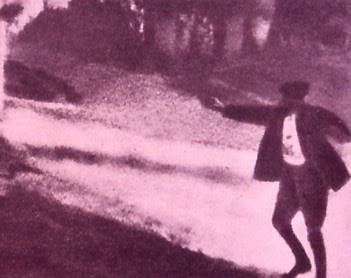
     I had forgotten, in fact, that the Almodóvar film begins with the young son, Esteban (Eloy Azorín), watching the scene from All About Eve in which the Holm character introduces Anne Baxter to Bette Davis. Soon after, in the Almodóvar film, his mother gives him a birthday gift of Truman Capote’s Music for Chameleons, and by the next scene the two, mother and son, are attending a production of Tennessee Williams’ play A Streetcar Named Desire. Although the stylized production from which Almodóvar shows us scenes, looks quite moribund as a theatrical event, it is clear that the starring actress, Huma Rojo (Marisa Paredes) and the play are favorites of the young Esteban, evidently a budding young gay boy. So enamored with Huma is Esteban that he waits in the alley after the play hoping to get her autograph, and when her car speeds by without acknowledging his request, he chases after. Moments later he is hit and killed by another car.


     So begins the tragic series of events that might be defined as the trail of “blood on the ground” of his mother Manuela’s life. She has told Esteban nothing of his father but had promised him she would reveal information the next day. It is now too late, and, in mourning, Manuela follows her son’s donated body parts to the new recipient and follows the tracks of her life back to Barcelona from where she has originally come. As in many an Almodóvar film, it is the journey that leads to self-perception and, in this case, reconciliation with an outré past that Manuela has tried to put behind in order to build a more normative life for her and her young boy—a past that includes prostitution, drugs, lesbianism, transvestitism, and AIDS.

      We realize in the very first scenes in Barcelona just how different has been Manuela’s past from the productive life she lives in Madrid as a nurse-teacher, helping her fellow employees to learn how to obtain permission from victims’ families to donate their loved ones’ body parts. Taking a taxi to an isolated circle round filled with drag queens, transvestites, and whores, Manuela discovers an old friend, the transvestite, Agrado (Antonia San Juan), being robbed and beaten. With Manuela’s help, Agrado is freed, and the two turn to a local nun to seek employment, but mostly in order to get Agrado off the streets. The nun, Hermana Rosa (Penélope Cruz), tries to find employment for them in her mother’s house, but her mother, a harsh critic of Hermana’s activities and her friends, refuses. A few days, later, however the tables are turned, as Hermana, realizing she is pregnant, begs for a room in Manuela’s newly rented apartment.


     As anyone who has seen an Almodóvar movie might suspect, coincidences abound; and we soon discover that the father of her child is Lola (Toni Cantó), the father also of Manuela’s Esteban, Lola being a transvestite who has continued to practice heterosexual acts and who has also been Agrado’s roommate. As Manuela summarizes the bizarre sexual situation: “How could anyone act so macho with a pair of tits like that?”

      Attending a Barcelona performance of the Williams’ play she and her son have seen the night of his death, Manuela insinuates herself in the life of Huma and her drugged-out actress lover, Nina, who plays Stella in the drama. When Nina fails to show for one performance, Manuela, who has played the role in amateur productions as a young woman, goes on for her, creating even closer bonds between Huma and herself. Ultimately, Agrado takes over Manuela’s role as Huma’s secretary, while Manuela turns her attention to Hermana, who has now discovered that through Lola she has been infected with HIV.

      In short, Almodóvar creates in All About My Mother a strangely interrelated group who, together stand against the normality in the world outside of theirs, but serve each other almost as a tightly-knit, maternal family—substitutes, perhaps, for their own failed family ties. When Hermana dies in childbirth, Manuela adopts the child, caring for it in the very house from which Hermana’s mother had originally rejected her. But when the mother observes Manuela showing the child to a transvestite, the returned Lola, she is outraged. With the patience and forbearance that Manuel has shown throughout, she explains that the man-woman is the child’s father. Hermana’s mother is horrified, afraid even to touch the child for fear of contracting AIDS. Even the forgiving Manuela perceives the situation; as she puts it to Lola: “You are not a human being…Lola. You are an epidemic.”


     Once more, accordingly, Manuela leaves Barcelona without saying goodbye, this time to return two years later for an AIDS conference where she reveals that the baby is now completely AIDS free.

     In the end, of course, we have discovered nearly everything we need to know about Esteban’s mother, but where is Esteban in all this? Dead of course, having learned nothing of the truth the viewer has received. Even Lola, finally told of Esteban's existence, dies soon after, so that we can only wonder to where the center of perception has shifted. Obviously, it is Manuela, through her memories of her first son, and the process of raising the second, for whom the encounters in the film have any true meaning. What she has been seeking throughout the film in her returns to Barcelona and her bizarre past is not Lola and her old friends, but herself, that part of herself she has destroyed in order to move forward. By film’s end, moreover, the “my mother” of the title is not so much about Esteban’s mother as it is any mother and the truths and lies mothers share with daughters and sons. The director brings these various loose threads together, when he combines, in a dedication, the various great actresses of the films and plays with all women, all mothers, his own mother:


                    To all actresses who have played actresses. To all women who act.

                    To men who act and become women. To all the people who want to

                    be mothers. To my mother.


That link, in turn, strangely interconnected this film with my own previous discussion of All About Eve in a world in which women rarely come to any good.


Los Angeles, July 16, 2012.

Reprinted from World Cinema Review (July 2012).                  

Chris Marker | Sans Soleil (Sunless) / 1983

the loss of forgetting

by Douglas Messerli


Chris Marker (screenwriter and director) Sans Soleil (Sunless) / 1983


Ostensibly a documentary performed as a kind of random travelogue—scenes were filmed in Japan, Guinea-Bissau, Iceland, Paris, and San Francisco—Chris Marker’s Sunless is a collage of images from Japanese films and television, stock footage, and stolen clips from films as well as newly filmed scenes from a silent film camera as an exercise, in part, to juxtapose behavior by playing time against place. 


     The film opens with two quotes, the first by Racine, “The distance between countries compensates somewhat for the excessive closeness of time” and a quotation from T. S. Eliot’s Ash Wednesday: “Because I know that time is always time / And place is always and only place / And what is actual only for one time / And only for one place.”

    Marker’s film, accordingly, is a kind melancholy and slightly nostalgic study of time and memory (the title is taken from song cycle by the Russian composer Modest Mussorgsky).


      As the film’s narrator relates the travels of fictitious cameraman Sandor Krasna, he emphasizes what Marker obviously sees as the dilemmas of being unable to remember:


"I will have spent my life trying to understand the function of remembering, which is not the opposite of forgetting, but rather its lining. We do not remember. We rewrite memory much as history is rewritten. How can one remember thirst?"


      Without memory, however, how can we understand and comprehend global histories; how can we come know our fellow man? The traveler’s method, therefore, is not explore what we think we know but the banal aspects of life.


"He liked the fragility of those moments suspended in time. Those memories whose only function had been to leave behind nothing but memories. He wrote: I’ve been around the world several times and now only banality still interests me. On this trip I’ve tracked it with the relentlessness of a bounty hunter. At dawn we’ll be in Tokyo."


     The result of this search for banality often produces fascinating information and connections as the film focuses on the beauty of children on an Iceland road, on the powerful women of Guinea-Bissau, and on a shrine for cats in Japan. Some of the narrator’s comments are in fact quite profound and succeed in revealing new layers of the disparate cultures the film explores.


   At other times, however, Marker’s narrative reminds me a bit of the often hackneyed and clichéd notions of culture that we have seen in French theorists who talk of the entire US in terms of Los Angeles and Las Vegas in vague overstatements that have little to do with the reality of those places, let alone the whole country. In short, Marker’s narrator often finds profound ideas in what might be quite meaningless to the cultures themselves, reminding me a bit also of the late 19th and early 20th century European and American “orientalism,” a fascination with anything that seemed different, without the ability of those “orientalists” to put the images upon which they focused in proper context. Marker’s film often makes large claims for the banal activities he explores. For example, his observation of Japanese horror movies—“Japanese horror movies have the cunning beauty of certain corpses.”—may be an absolutely legitimate conclusion, but one would like to know how he has come to this conclusion and where it leads. Time and again, Marker’s narrator settles of such seemingly profound generalities presented as aphorisms, without explaining their meaning or significance in the whole.

     Of course, this also creates a kind of poetic quality to the work which brings it, at times an evocative power. And perhaps the focus on the small acts and odd components of a society may better help to make us remember, bringing us closer the filmmaker’s goal of creating a “loss of forgetting.” But at times Sunless is literally so dark and vague that it becomes hard to even know where we have been, let alone allowed to remember the place.


Los Angeles, August 25, 2012

Reprinted from International Cinema Review (August 2012).

Abigail Child | On the Downlow / 2007 [documentary]

 depictions of self

by Douglas Messerli


Abigail Child (director) On the Downlow / 2007 [documentary]


Featuring four young men and their male and women friends, Abigail Child documents in On the Downlow a world that is seldom seen by white Americans, a world of mostly black gay and transgendered men, who instead of describing themselves as "gay"—a term which they see as  robbing them of masculinity—characterize themselves as living life on the "downlow." These men share commonalities in their feeling of an outsider status within their race, but, for the most part, it is their own differences that Child so brilliantly reveals.


     Ray, a Cleveland man who characterizes himself as a thug, surprises us in his very first conversation by revealing that he is attracted to the most feminine of men, often dressed as drag queens. For him they are women and he treats them as women, and in his odd view, as women he does not need to reveal whether or not he has HIV or uses a condom. While attracted to "pretty boys," he prefers the most feminine ones perhaps because he further establishes his sense of masculinity, of being a "top" instead of a "bottom."

     Antonio reveals a past prison life where he slept with hundreds of men, even guards, playing the role almost of a woman, presenting a shocking view of US prison life, some of which we might have imagined but never understood as being so thoroughly prevalent. By film's end, Antonio is again arrested, his current lover faithfully waiting for his return.


    One of the most fascinating of these young men is Kerwin, who perceives himself as a bisexual, but shares little with his fellow workers, and to protect himself or, one should say, to allow himself a kind a cover also has women friends whom he sometimes brings to the gay clubs he frequents. Yet Kerwin does admit his sexuality to a close woman friend and to his formerly military father in the course of the film, challenging the notion that this is primarily a secret world. These men are simply careful, for we perceive coming out to their own community as sometimes a dreadfully painful event, resulting in rejection and brutality.

     Billy, who has had two children with a woman, lives with an older man in a kind of mentor relationship, recognizing the "downlow" community as more like family than the frictions of family life itself. Yet he would he give up everything, he admits, if he could only get custody of his children and raise them in a "normal" environment.

     In fact, all of these men see the "downlow" lifestyle as a communal one, as mix of various kinds of sexualities, Kerwin going so far as to describe the "downlow" life of Cleveland as being a kid of blur of different beings—as opposed to the more regimented lifestyles of both black and white families.

     Whatever we might think of or have thought of the "downlow," it is brilliantly challenged by Child's documentary, as we gradually come to know these figures who bravely reveal to us on camera the open secrets of their lives. One of the most painful moments of the film is Kerwin's nervous admission to his father over the phone, expressing his bisexuality. He is terrified by his father's potential response, but the father surprises him and the audience by being generously loving and caring for his son, once again working against expectations.


      Tagging along with these men to some of the "downlow" bars and clubs we witness a world which is simultaneously life-affirming and, occasionally, frightening. Flare-ups sometimes occur when someone is defined in way that does not align with their perceptions of self. Yet it is these very perceptions of their own beings, the way they manage in a world unreceptive to their sexuality, that shows us just how truly sophisticated these folks are. As Billy puts it: “Contrary to popular belief, being gay is not something you can turn on and turn off when you feel like, as far as the motions go and what you actually like. Now the way that you present yourself is something different, you may present yourself as a thug or present yourself as somebody who’s on the DL or present yourself as a drag queen, or somebody who is way out there, the way you present it, you can turn on and turn off changes, or modes or what you want it to be, but the actual feeling, NO.”

     Through a gritty and yet beautiful vision of city, we come to know and feel for these Cleveland men and women, who have discovered a way to stay in touch with their worlds while still living lives apart.


Los Angeles, March 5, 2012

Reprinted from International Cinema Review (March 2012).

Josef von Sternberg | The Last Command / 1928

after caviar

by Douglas Messerli


Josef von Sternberg (story, based on a story by Lajos Biró), John F. Goodrich (screenplay), Herman J. Maniewicz (titles), Josef von Sternberg (director) The Last Command / 1928


Von Sternberg’s masterful silent film of 1928, The Last Command, began as a true story told by Ernst Lubitsch about a general in the Imperial Russian Army, Theodore A. Lodigensky, now working in a Russian restaurant, who ended life as working as film extra—playing film generals—for $7.50 a day. Lubitsch told the anecdote to Lajos Biró, who passed it on to Von Sternberg.


      Von Sternberg, in turn, transformed the tale into both an exciting adventure about the last days of the Russian Empire and a devastatingly dark satire of Hollywood, beginning with a Hollywood director, Leo Andreyev (William Powell), in attempting to cast a movie about Russia, suddenly recognizing the former Grand Duke Sergius Alexander (Emil Jannings) in a batch of photographs of possible extras. Back in Russia, Andreyev had been a Communist supporter hiding out with a girlfriend, Natalie Dabrova (Evelyn Brent) before they were taken into custody by the Grand Duke, who later lashed out at Andreyev with a whip lash across his face. The Grand Duke, in turn, takes Natalie back to his headquarters, with an intent to seduce her. In fact, when she discerns, despite the cruel actions of the Grand Duke’s cousin, the Czar, that the Grand Duke is loyal, attempting to save a war-torn Russia, she does fall in love with him. On a railroad trip to the front, however, the train is overtaken by revolutionaries, and, to save him, Natalie quickly rejoins the Communists, suggesting they force the elderly general to stoke the train all the way to Petrograd, where he will be hung. Mid-trip, she helps free the Duke, handing over the pearls he has given her, so that he can buy his way out of the country. He jumps from the train, only to watch the railroad cars fall from a nearby bridge, killing everyone.

 For Andreyev, accord-ingly, it is not only that the Grand Duke “looks” the part in for he will cast him, but is a sort of final revenge for the treatment he had once received.


       Von Sternberg later claimed that Emil Jannings, who won the first acting Oscar for, this role, kept mixing up the behavior of general before and after his fall from power, sometimes playing the powerful Grand Duke too much like the head-twitching old man of the latter half. But for me, it is just this slight confusion that lends Jannings’ performance so much credence. Even as the towering general, head of the Russian forces, he is also a kind of fool, a man who dares to believe he can lure the beautiful Natalie into his bed. As his own men perceive, he does not even know the proper procedure, awarding her the gift of pearls before the champagne and caviar, when most seducers would have waited until after. It is just this slight confusion, which Jannings would repeat with the beautiful Marlene Dietrich in The Blue Angel two years later, that makes the character so appealing, despite the fierceness and intensity of his commitment to his cause, as he becomes a kind of “holy fool,” a man of such deep resolve that he becomes admirable despite being on the wrong side of history.


     The director, meanwhile, tells his tale, both within the ivory-white halls of the military headquarters, a glamorous space where dashing Russian soldiers toast her beauty, and in the later train scenes, which von Sternberg uses somewhat like a stage set, careening his busy camera in and out of the open train windows as the revolutionary masses reveal their true bestial selves, getting drunk and nearly raping Nathalie.

      The man we encounter in the last scenes of the film is in such a sorry state that he can only keep shaking his head as he is led through the mass “breadline-’like” call of thousands of extras more like a soon-to-be-slaughtered cow a human being. Mocked by the others, particularly for claiming a white cross around his neck was gift from the Czar, the Grand Duke Sergius Alexander is forced to apologize for his own psychological condition: “I have had a great shock.”


       Obviously the “great shock” might be seen to be his fall from position, the sudden reversal of history and of his own fate. One might imagine that is what von Sternberg was thinking. But I would suggest that the shock was more likely the discovery, despite his often bumbling bluff of living, that Natalie, the Communist activist, actually did love him, followed immediately by her sudden death that represents the “great shock” of which he speaks, that his often martinet-like support of Mother Russia was seen by this woman as something else, an idea which reverberates with Andreyev’s and his assistant’s evaluation upon the old general’s death on the set:


                                   The Assistant: That guy was a great actor.

                                   Leo Andreyev: He was more than a great actor—

                                         he was a great man.


       In the short scene in which the Grand Duke Sergius Alexander performs, dressed as he had during the real-life scenes, the old man is challenged by an underling soldier: “You’ve given your last command.” Furious with the challenge, he takes up the whip on cue—just as he had in the earlier scene with the young Andreyev—to punish him. But in this scene, confused by the movie cameras, and suddenly mistaking the present for the past, he rises to his full height, as if, for a moment, he might take on and destroy the entire Hollywood scene—camera, cameraman, crew, and director all, before collapsing, a scene of cinema-inspired madness that will not be repeated until years later, in Billy Wilder’s Sunset Boulevard.


Los Angeles, August 6, 2013

Reprinted from International Cinema Review (August 2013)


Josef von Sternberg | The Salvation Hunters / 1925

children of the sun

by Douglas Messerli


Josef von Sternberg (screenwriter and director) The Salvation Hunters / 1925


Filmmaker Josef von Sternberg’s first film, The Salvation Hunters we were told last night by his son Nicky von Sternberg, was paid for entirely by the director, clearly a leap faith into the medium by the young cinematographer. Like many of von Sternberg’s later films, in this one we recognize from the very beginning that the director is less interested in a psychologically realist presentation than he is in his Zola-like thematic. Just as I have argued previously for fiction, the early twentieth-century filmmakers had seemingly not yet determined to choose the psychological approach over the theatricality of a picture of ideas. Although von Sternberg’s world presents strong images, they are for the most part, framed and statically portrayed in order to reiterate the issues of his film. Unlike some silent filmmakers, who attempted to keep their storyboards to a minimum, von Sternberg uses the story board continuously, at times cutting to his characters and their environment only for a few seconds before returning to his statements to declare that these figures—a suffering girl (Georgia Hale), an out-of-work boy (George K. Arthur) and a homeless urchin (Bruce Guerin) who, quite accidently, come together as a kind potential family unit when a brute (Olaf Hytten) attempts to engage the girl in sex.


    So von Sternberg tells us, these three victims are creatures of the mud, “crawling close to the earth,” but seeking some way out of their situation. Von Sternberg does not at all attempt to give us their back-stories or an explanation of how they have come to this harbor, but rather defines them according the nets and ropes of the sea-going village, continually cutting across their space with the perpetual motions of the dredge, relentlessly digging up mud from the bottom of the harbor to pour it into a long boat which appears unable to hold it contents, as the mud pours back into the waters only to be dredged up once again.

     Threatened by the brute, the three flee the muddy harbor, traveling to the nearby city (presumably Los Angeles) where they appear equally out of place, with no food or money. Spotting the newcomers a man (Otto Matiesen) and gentleman (Stuart Holmes), offer the “family” temporary quarters, but it is clear that both are doing it only so that they can keep the girl nearby, using her for sex. To break down her defenses, the captors refuse to buy the family any food and they are forced, that first night, to go hungry. On the following day, the boy goes in seek of a job, but comes back to the flat empty-handed. Although the man already has a woman, who appears to be his tortured wife, he again attempts to take advantage of the girl. She seems to consider going along with his offer, particularly when he hands her some money for her services, but the child grabs up the bill and runs, bringing home provisions and temporary protecting the girl from the sex-starved stranger.


    Similarly, the man attempts to pimp the girl’s services to the gentleman, but when that too fails, he determines to attempt to romance her in the out-of-doors. They drive to what looks like a patch of weeds instead of a comfortable pastoral spot; at the entry to this world stands a real estate sign, reading: “Here Your Dreams Come True.” It is ironic commentary on the evil man’s plot, and when she fails to respond to his romancing, the child rushes to the girl’s side, attempting to protect her, the man, just as the brute before him, kicking away the child. Once more, despite his apparent lack of athletic prowess, the rushes to protect the child and girl, this time, for a change, besting the man and continuing to beat him until he falls from the real estate sign into his waiting automobile below. Together, the three, children of the sun, walk off into the sunset. We have no idea where they may be going, but they have succeeded, we are assured, in altering their previous lives.


     Although this film, in hindsight, has a great many interesting qualities, it was a complete failure at its premiere. As von Sternberg has written: “The members of the cast were in the audience, which greeted my work with laughter and jeers and finally rioted. Many walked out, and so did I.” Soon after, George Arthur, arranged for Charlie Chaplin and Douglas Fairbanks to see the film, and reportedly, both reacted with enthusiasm. Chaplin later declares he praised it only as a joke. But, in fact, the film’s subject and ending, is not so very dissimilar to Chaplin’s own films—albeit that von Sternberg’s dour film has none of the little tramp’s comic adventures beforehand. And what now seems impossibly dated, represented at the time another possible direction Hollywood films might have taken—and which it did, in fact, experiment with in the later and greater films of the imperious director.


Los Angeles, July 20, 2013

Reprinted from International Cinema Review (July 2013).


Alexander Dovzhenko | Земля (Zemlya) (Earth) / 1930

abstraction and individuation

by Douglas Messerli


Alexander Dovzhenko (screenwriter and director) Земля (Zemlya) (Earth) / 1930


Dovzhenko’s great film of 1930 was intended to be a kind of Russian propagandist film encouraging Ukrainian kulak (individual and often rich farmers) to join with one another in establishing state collectives, and the kernel of the tale of kulak unrest and the murder of a young member of the Komsomol, Vasyl (Basil) (the beautiful Semyon Svashenko), remains at the core of Dovzhenko’s movie. The film, in outline, presents its political “plot.”


     Despite the opposition of Vasyl’s father, Semyon (Nikolai Nademsky) and his uncle Opanas (Stepan Shkurat) are opposed to it, as are their neighbors, while Arkhip Bilokin (Ivan Franko) and his son Khoma (Thomas) (Pyotr Masokha), prefer to work the rich land and its harvests in the old manner of oxen and plow.

      To prove them wrong, Vasyl and his compatriots arrange to have a tractor sent, and proudly drive it through their small village, with crowds arriving to gape at the new wonder. When suddenly the tractor stops, the driver discovers that the radiator is dry. With no water in sight, the Komsomol members are stymied until the driver suggests that the men piss into the radiator and the tractor moves forward again.

     The following montage shows Vasyl busily harvesting the wheat, demonstrating the entire process of gathering the grain to the production of bread. But in the process he also destroys the fences belong to the Bilokins. That night, as Vasyl joyfully dances home, he is killed by Khoma.

    Distraught by the death of his son, Semyon orders the priest off his land, and asks Vasyl’s friends to bury him instead, in a new manner with contemporary songs, since his son believed so strongly in the future. They agree to do so, and the entire village joins them in a joyous celebration of Vasyl, Khoma going mad in the process and admitting his guilt.

     Vasyl’s glory will fly around the world, argues one friend, just as does the new Soviet airplane. So ends the “propagandist” aspects of Dovzhenko’s tale.


     Had the director simply presented this in simple terms, the authorities might have been pleased, but film historians would never have bothered about this masterwork, often rated today as one of the most important works of cinema. It is almost as if, mesmerized by his homeland’s landscape, families, products, and cultural perspectives, Dovzhenko could not resist celebrating them in a manner that renders his film’s political intentions nearly mute. Soviet critics of the day certainly seemed to miss the basic story, describing the film as “ideologically vicious.”

     The film begins with vast waving fields of grains, lingering camera shots of apples and pears, and the death of a family elder, who just before dying, sits up to eat his last pear. Family individuals are shot separately as in 19th century portraits, usually with camera looking up and directly into their worn and drawn faces, or, in the case of the handsome Vasyl, portraying him in silhouette, looking off into the distance, are obviously symbolic of the direction he would take his family and friends. *

     In the long scene in which we see Vasyl harvesting the wheat, Dovzhenko turns his basically realist tale into a series of abstract images, as the wheat and its chaff go hurtling endlessly through space, with Ukrainian maidens gathering the bundles by tying them together in braids of grain. Huge mixing containers beat up the dough before it is molded into the form of loaves and placed into gigantic ovens. We see thousands of loaves of bread being spewed out of the ovens into space. In short, the individuation of the first scenes is utterly transformed into collective abstraction, reiterating the theme, but also transforming this film from a simple realist tale into a wondrous cinematic spectacle of the abstract akin to the paintings of Russian artists such as Kasimir Malevich.


     The hopak that Vasyl dances on his way home that evening is not simply a peasant dance, but a performance of graceful beauty that also suggests a kind of “dance of death,” as the director focuses on his white-bloused figure against the blackness of night, a figure who quite literally stirs up the dust of earth in his intricate footsteps, whirling like a dervish into destruction. He has, after all, dared to threaten, in his very devotion to idealism, the ancient way of Ukrainian life. And although he is certainly a hero, he is also a fool in his impulsive rush into the future.


      His celebratory funeral is interspersed with a fantastic triptych: the local priest calling down god’s wrath upon the now atheist community, an anguished naked pledge of love by Vasyl’s girlfriend, and the increasingly mad run of Khoma, attempting to speed away from both the masses and himself, a rush that ends in the graveyard, where he too dances out a kind of invocation to death and screams out his guilt to the world, with no one there to hear him. Dovzhenko portrays him in his silent film as one of the loneliest beings on the planet, a man who cannot even find someone to whom he can confess.


      Once more the earth is stirred up into dust, while Vasyl’s mother bears another baby.

    In the final scene the rains gather, pouring down upon the rich landscape, dripping seemingly endlessly across the surfaces of pears, apples, melons and other fruits, which in the director’s hands become another kind of abstract representation of nature. And, in the end, Dovzhenko’s film seems more concerned with the cycles of nature and human life and death than the political fable at its core. Daily life matters in Earth far more than the political fissures and bonds of social structures. The individual and their eccentricities seem of far greater worth than the abstractions of a collective living. If nothing else, Dovzhenko gives them equal value in his idyllic testament to the Ukrainian way of life.


       By coincidence, Netflix sent me this film on the very days when the modern Ukraine was rebelling against their President’s attempt to realign their country with the Russia. You certainly do perceive in The Earth the importance of the Ukraine to the former Soviet Union. It seems almost eerie to realize that most of the work was filmed in and near Kiev, where just yesterday fires were blazing in protest of the alignment which Dovzhenko’s kulaks also fought.     


*In Earth’s continual series of friezes, we can perceive the film’s later influence on other Soviet filmmakers, including the Armenian director Sergei Paradjanov.


Los Angeles, February 21, 2014

Reprinted from International Cinema Review (February 2014).


Index O-Z

Dave O'Brien Straight Boys / 2005 Nick Oceano El primo ( The Cousin ) / 2008  Ken Ochiai Phoenix / 2006 Carlos Ocho Relación Abierta ...